Written by Tiff | A Grief Moment
These words are often used interchangeably, though they don’t necessarily mean the same thing.
Bereavement is the experience of losing someone, particularly after a death. It describes the circumstance of the loss.
Grief is the response to that loss. It can involve sadness, anger, confusion, relief, guilt, longing, numbness, or even emotions that are difficult to put into words. Grief can also show up physically, mentally, socially, and spiritually.
Mourning is how grief is processed and expressed. It can be deeply personal, but it can also be influenced by our families, cultures, communities, traditions, and beliefs.
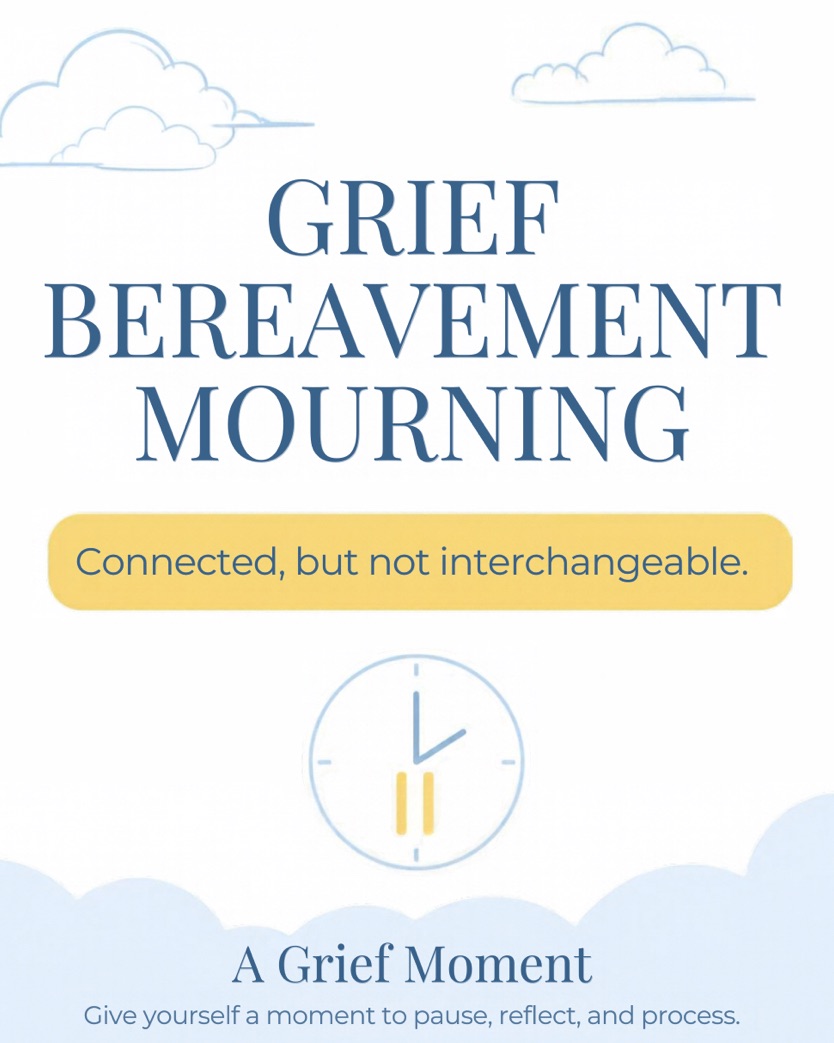
They are connected, but they are not interchangeable.
You can be bereaved because you experienced a loss. You can grieve that loss in ways that are unique to you, and you may mourn through the ways you express, process, and make meaning of that loss.
And here’s a very important thing to remember.
There is no single right way to grieve or mourn.
I’ll say that again. There is no single right way to grieve or mourn.
The way one person responds to a loss can look completely different from another person’s experience, and it doesn’t make one person’s grief more valid than the other’s.
Sometimes simply understanding the language we use to describe grief can help us better understand the experience itself.
Give yourself a moment to pause, reflect, and process.
Sources:
American Psychological Association (APA)
Parkes, C. M., Grieving and Mourning: The Psychology of Bereavement
Shear, M. K., et al., “Grief and Mourning Gone Awry: Pathway and Course of Complicated Grief”


Leave a Reply